Key Takeaways
- Blueberries provide fiber, vitamin C, and antioxidants that can be part of a balanced diet as you age.
- Their plant compounds support cardiovascular health and may benefit brain health and memory.
- Most older adults can enjoy blueberries, but portion sizes, food allergies, and certain medications may affect individual dietary needs.
- Fresh and frozen blueberries are easy to add to oatmeal, yogurt, smoothies, and other everyday meals.
The Truth About Blueberries & Aging
You reach for a handful of blueberries and pause. Are these tiny berries actually good for you, or could they cause trouble as you get older? For most older adults, blueberries are a nutritious choice that can fit into a balanced diet.
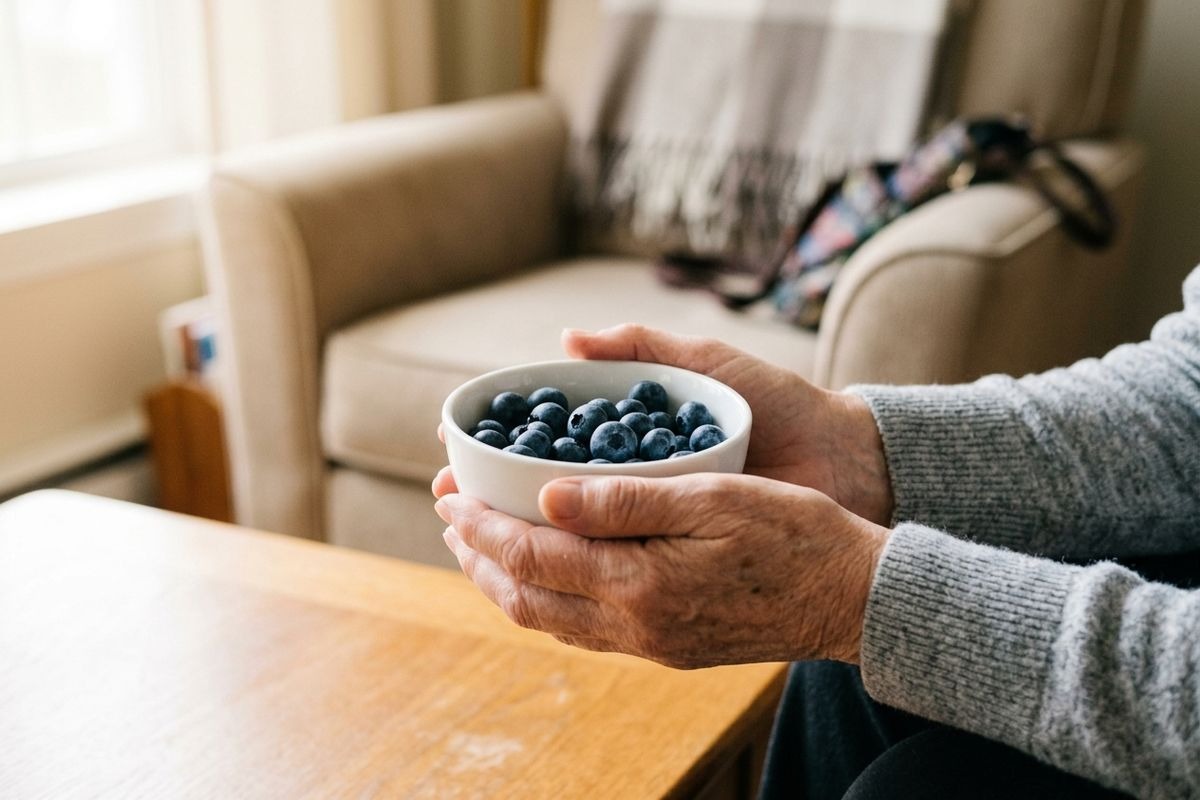
Blueberries provide fiber, vitamin C, and plant compounds called anthocyanins, which give the fruit its blue-purple color, and antioxidant properties. While no single food can prevent age-related health concerns, blueberries offer a simple way to add nutrients and variety to your meals.
Health Benefits of Blueberries
Blueberries offer more than a sweet taste. Their fiber, vitamins, and plant compounds provide nutrients that support several aspects of your health as you age.
Heart & Blood Pressure Support
Blueberries contain anthocyanins, plant compounds that help protect cells from oxidative stress and support cardiovascular health. Including blueberries with other fruits, vegetables, whole grains, and healthy fats can help you build heart-conscious meals.
Brain & Memory Health
Keeping your mind active is an important part of aging well, and nutrition plays a role in overall brain health. Blueberries contain antioxidants that help protect cells from oxidative stress. Their plant compounds can also support brain health and memory as you age.
Enjoying blueberries alongside a balanced diet, regular physical activity, and activities that keep your mind engaged can help you maintain a healthy lifestyle.
Skin & Digestive Health
Blueberries provide vitamin C, which helps your body make collagen, a protein that supports skin structure and wound healing. They also contain fiber, which helps support digestive health.
Although blueberries contribute nutrients that help your body function, they aren’t a substitute for surgical treatments for health problems. A varied diet that includes different fruits and vegetables is a better way to obtain the range of nutrients your body needs.
When to Be Careful with Blueberries
Blueberries are safe for most people, but individual dietary needs can affect how much you choose to eat.
- Blood sugar management: Blueberries contain natural sugars and carbohydrates. If you manage diabetes, consider portion sizes, and how fruit fits into your overall meal plan. You generally don’t need to avoid blueberries solely because they contain sugar.
- Food sensitivities: Although uncommon, food allergies can occur. Stop eating blueberries if you experience a suspected reaction and seek medical advice. Get emergency help for signs of a severe allergic reaction, such as difficulty breathing, or swelling of the throat.
- Medication considerations: Blueberries contain vitamin K1, but a typical serving provides a relatively small amount. Ask your pharmacist or care team before making significant changes to your diet.
For most older adults, there’s no need to avoid them simply because of age. If something feels off, talk with your care team before making blueberries a daily habit.

Simple Ways to Enjoy Blueberries
Blueberries are easy to work into meals without changing your usual routine. Try a few simple combinations to add variety to your day.
- Breakfast: Add blueberries to oatmeal, yogurt, or whole-grain cereal.
- Smoothies: Blend blueberries with yogurt, milk, or a milk alternative and a banana for a quick snack.
- Salads: Toss a handful into a leafy green salad with nuts and a light dressing.
- Frozen treats: Blend frozen blueberries with plain yogurt for a simple, refreshing snack.
- Quick fruit topping: Warm blueberries in a small saucepan until they soften, then spoon them over oatmeal, pancakes, or yogurt.
Fresh and frozen blueberries are both nutritious options. Frozen berries are convenient to keep on hand, and freezing helps preserve many of their nutrients. You can add them directly to smoothies or let them thaw before mixing them into breakfast dishes.
Nutrition & Support at The Wellington at Lake Manassas
Good food tastes better when someone else handles the planning and prep. That’s where thoughtful dining and daily support come together. Having nutritious options ready to enjoy can make it easier to maintain healthy eating habits without the extra work.
At The Wellington at Lake Manassas, part of Retirement Unlimited, Incorporated (RUI), dining is about more than what’s on your plate. Through Taste of RUI, residents can enjoy a dining experience shaped by fresh flavours, variety, and the pleasure of a good meal.
You’ve earned a place where comfort, connection, and good nutrition come standard. Book a tour and taste the difference for yourself.